If you’re planning a vacation involving using the trains to travel in Italy, you might picture yourself gliding past vineyards and Tuscan hilltop villages without a care in the world. Sometimes that’s exactly how it feels. Other times, you’ll be at the station, stressed and confused about why your platform number just changed AGAIN!
To make it easy, I recommend you do a little advance planning. Here’s everything you need to know about trains in Italy, what to do when things don’t go as planned, and how to get yourself back on track (LOL – pun intended)!
A Little About Us
Hi! We are Justin and Lu, and we moved from Australia to live in Italy. Now that we live here, we have the luxury to travel around the country to visit and explore whenever we get the chance.
In this travel post, we share our experiences using the Italian rail system, including ‘local’ tips and tricks we’ve learnt along the way.
Buon Viaggio!
Understanding Trains in Italy
Ok. Here are some basics. There are typically three types of trains in Italy:
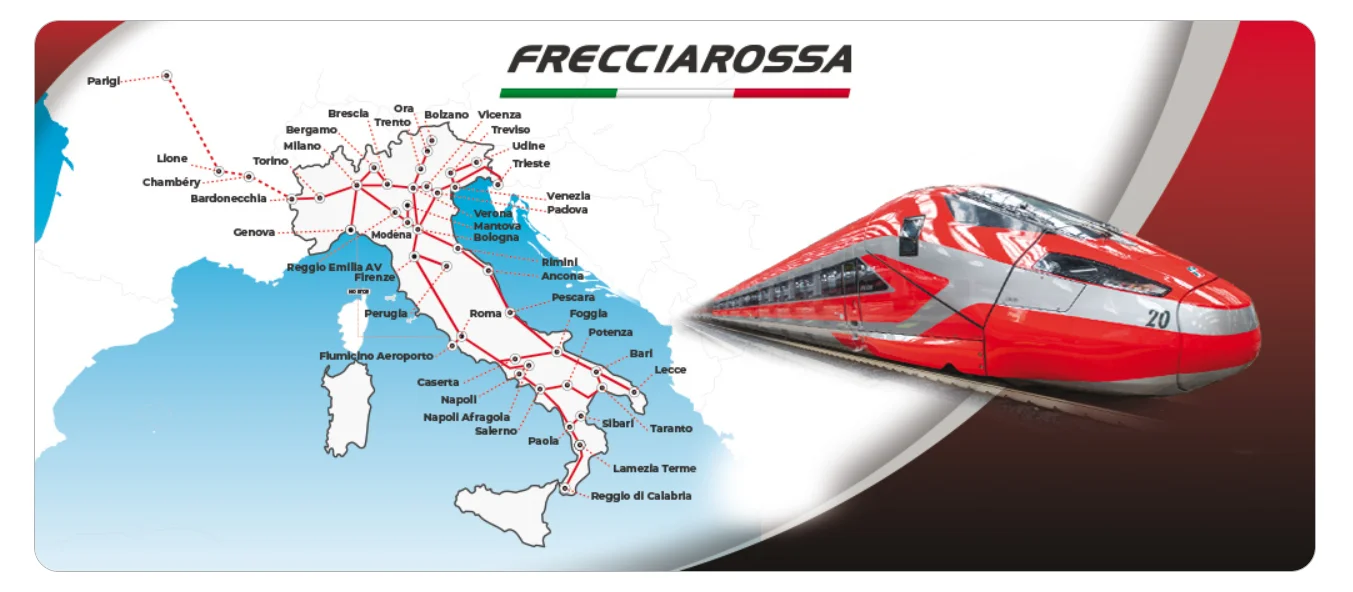
- High-speed trains (Frecciarossa, Frecciargento, Frecciabianca) – Fast, modern, and comfortable, these get you between big cities quickly.
- Intercity (IC) – Medium-speed trains that connect cities and larger towns.
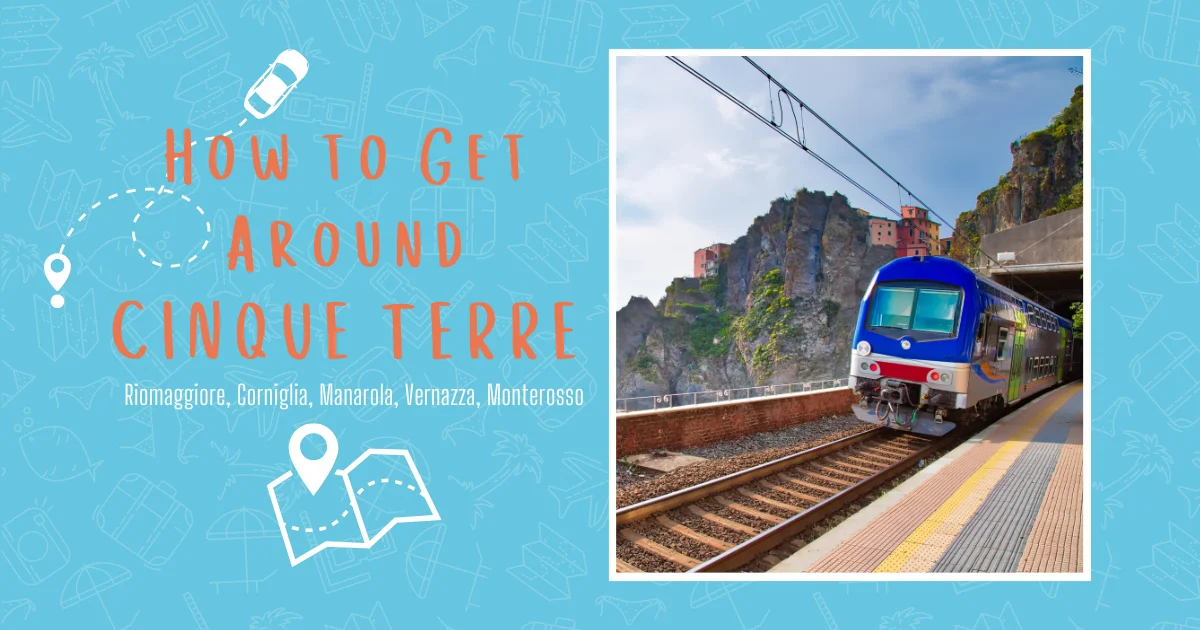
- Regional trains (Regionale / Regionale Veloce) – Slower, cheaper, and stop in smaller towns. Ideal for short trips like La Spezia to Cinque Terre or day trips between smaller towns.
If you plan to travel by train in Italy between major cities like Rome, Florence, Venice, or Milan, high-speed is usually best. For shorter local journeys, a regional train ticket will do the job.
Trenitalia is the major network provider, and the other smaller company is called Italo. I usually travel with Trenitalia (so this article is based more on my experience with their services).
How to Book Train Tickets in Italy
Best Way to Buy Train Tickets in Italy
For high-speed trains, the best way to buy train tickets in Italy is to book online a few weeks in advance. Fares can be much cheaper, and you guarantee yourself a seat.
Regional train fares are fixed and stable, and there is no ‘seat reservation’; so there's no gain in booking early. However, during peak season and at busy times, there is the danger that trains get very busy, with standing room only.
How to Buy Train Tickets in Italy - Online & In Person
If you’re wondering how to buy Italian train tickets without stress, online booking is the easiest. During the booking process, you can check the train timetable and secure a seat in minutes.
You can buy train tickets in Italy in several ways:
- Online – Use Trenitalia (covers most trains in Italy) or Italo. These are the two main network providers and are the primary service providers.
- Resellers & aggregators – Omio is an independent ticket seller – their booking platform is easy to use (multilingual) and shows train options for both Trenitalia and Italo.
- At the station – Ticket machines and ticket counters are handy for last-minute trips, but can be busy, and last-minute tickets are usually more expensive. Trains also get booked out!
Booking Trains in Italy with Reserved Seating
When booking trains in Italy, the high-speed trains and Intercity trains come with a reserved seat included in your ticket price.
When you book, you’ll be assigned a specific carriage and seat number, and that seat is yours for the entire journey.
Regional trains don’t have assigned seating, so it’s first-come, first-served.
Train Ticket Types Useful for Tourists
1st and 2nd Class Train Tickets
Italy’s high-speed and Intercity trains offer both 1st and 2nd class. Second class is perfectly fine for most trips, but first class gives you more space, quieter carriages, and sometimes free snacks.
When you buy train tickets in Italy, you’ll see both class options – choose based on comfort and budget.
Trenitalia Pass - A Tourist Pass for Easy Train Travel
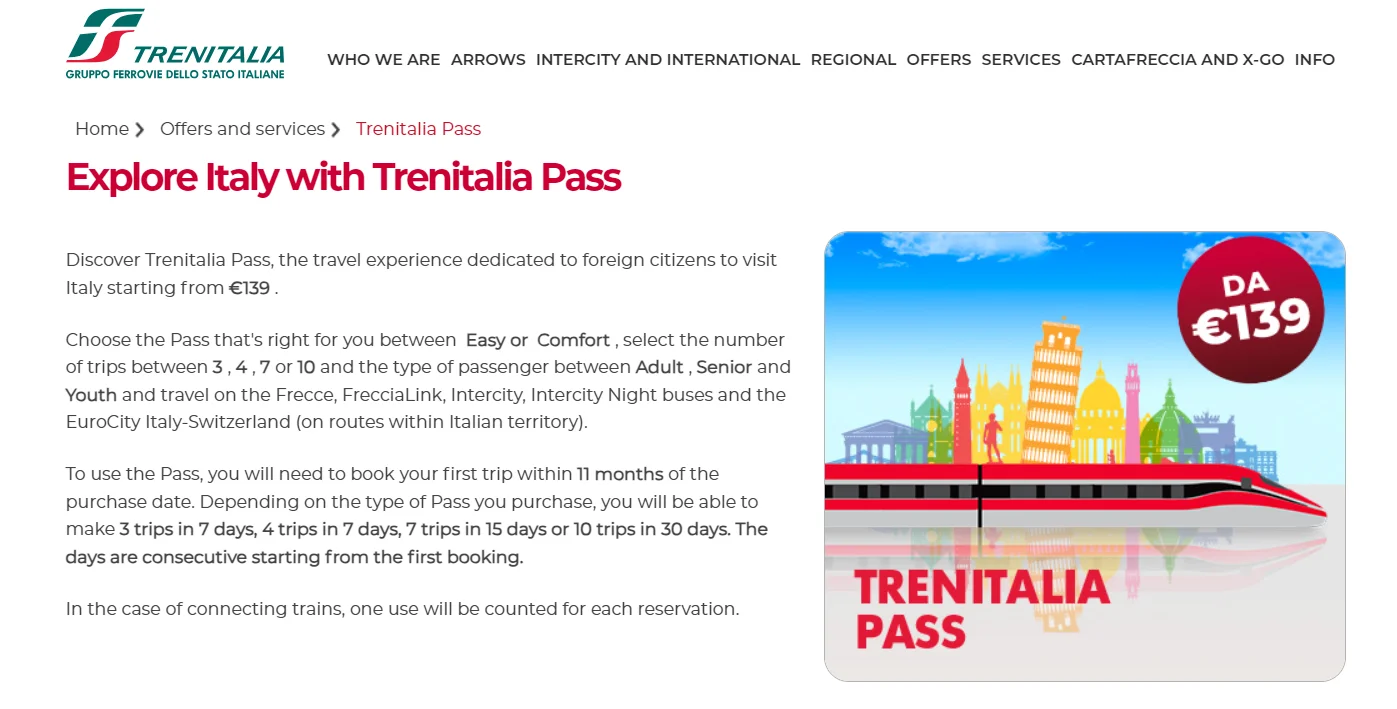
If your Italian trip includes multiple city hops, long distances, or overnight legs, then the Trenitalia Pass can save you money, hassle, and time.
Designed for tourists, it's a flexible, fuss-free way to explore the country’s major cities without constantly buying individual tickets.
- You can choose from 3, 4, 7, or 10 journey tickets
- There are both 2nd-class and premium options
- It covers Freccia (high-speed) trains, Intercity, and EuroCity (domestic Italian routes)
More information: Trenitalia Website
Cinque Terre Card - All Day Travel Pass for Cinque Terre
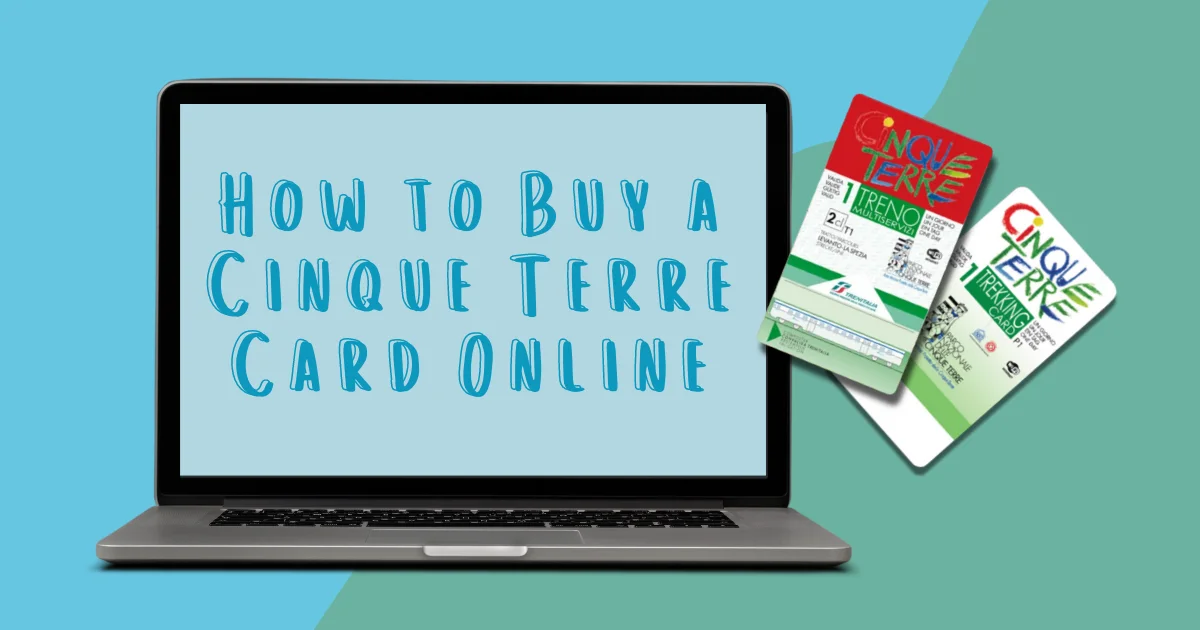
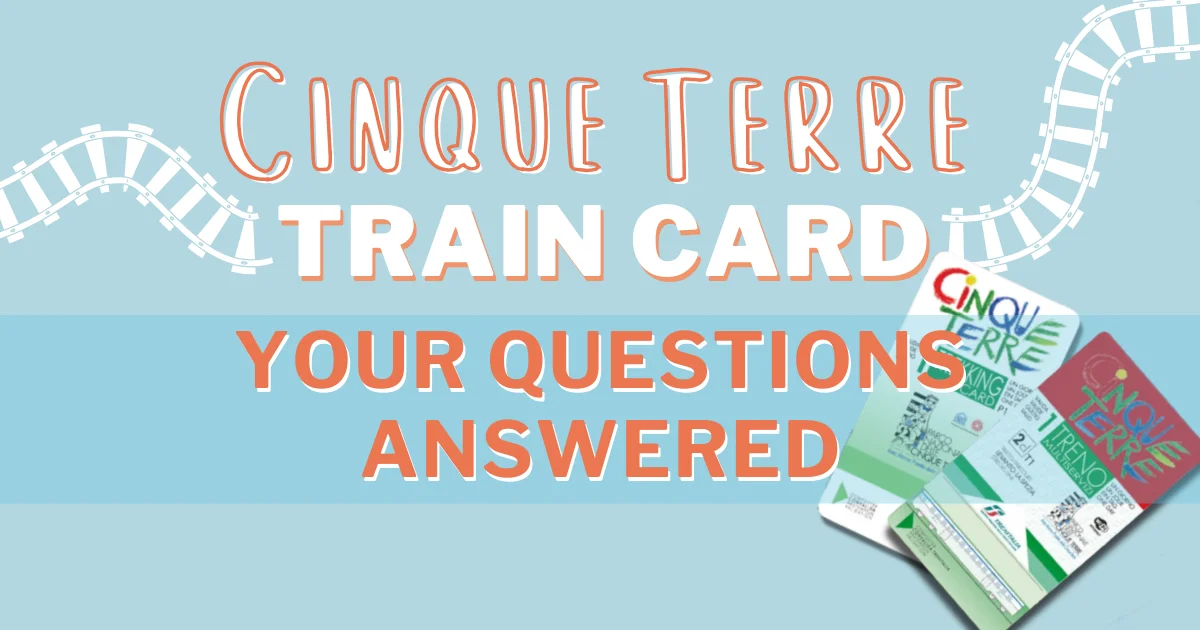
The Cinque Terre Card is a special pass that makes exploring the five villages by train and trail a whole lot easier. The card includes unlimited train rides on the Cinque Terre line between La Spezia and Levanto. It’s especially handy if you plan to hop between villages several times a day, since buying single tickets adds up quickly.
You can buy it at any local station in Cinque Terre or online.
Airport Connections
One of the easiest (and often cheapest) ways to get from Italy’s main airports into the city is by train, and Trenitalia sells dedicated airport link services that connect directly to the national rail network. Here are the airport connections most useful to tourists:
- Rome Fiumicino (Leonardo da Vinci Airport) – The Leonardo Express runs non-stop to Roma Termini in just 32 minutes. Trains leave every 15 minutes during the day.
- Milan Malpensa – The Malpensa Express links both airport terminals with Milano Centrale and Milano Cadorna stations, taking around 50 minutes.
- Venice Marco Polo – There’s no direct rail at the airport terminal, but Trenitalia offers combined bus + train tickets to Venezia Santa Lucia or Mestre, which is a neat all-in-one option.
- Naples Capodichino – A bus link to Napoli Centrale, then you’re on the mainline network.
- Florence Peretola (Amerigo Vespucci Airport) – A tram or bus connection that can be combined with your Trenitalia ticket.
Insider tip: You can buy these airport link services directly on the Trenitalia website at the same time you book your long-distance tickets. That way, your whole trip (e.g. Milan Malpensa Airport → Milan Centrale → Florence SMN) is on one booking. No juggling separate tickets after you’ve just landed!
Finding and Boarding Your Train
Italian train stations can feel busy and a little overwhelming at first, but they’re not too dissimilar to train stations in most countries.
Check the Departures Board (Partenze)
When you arrive at the train station, use the large boards and screens to look for your train number and destination. The train number is on your ticket, and it’s the most reliable way to find your train.
The boards will show the platform (binario). Platforms can change at the last minute, so keep an eye out for updates.
Validating Your Train Ticket
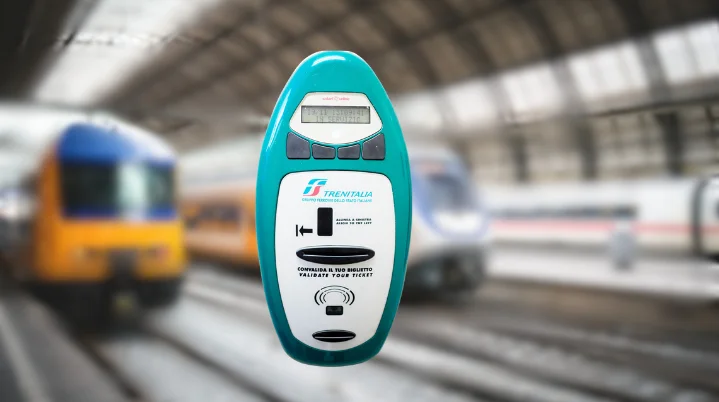
If you have a paper ticket, you must validate it in the green or yellow machines at the station before boarding. This stamps the date and time to prevent re-use.
High-speed and intercity train tickets bought online for a specific train, date, and time will be automatically validated.
Regional train tickets can vary. Your ticket will normally automatically validate – but always check your ticket for validation details.
Board Quickly
Trains don’t linger. If you have a reserved seat, find your carriage number (it’s on your ticket), store your luggage, and take your seat.
On the Train
Keep your ticket handy to show to the conductor. Fines are steep if you’re caught without a valid ticket.
Many of the high-speed trains and intercity trains have catering, buffet carts, and vending machines, but regional trains have no food or drink facilities.
Facilities at Italian Train Stations
Italian train stations located in cities have plenty of services. Here’s what you can expect:
- Ticket Counters & Machines – For buying, changing, or cancelling tickets. Machines usually have multilingual options.
- Luggage Storage (Deposito Bagagli) – Available at major stations like Rome Termini, Florence SMN, and Milan Centrale.
- Food & Coffee – Even small stations usually have a bar serving coffee and pastries.
- Shops – Larger stations often have pharmacies, bookstores, and convenience shops.
- Toilets (Bagni) – Usually pay-to-use (around €1-€2). Carrying a few coins is always useful for accessing toilets in Italy (and unfortunately, even paid toilets aren’t necessarily clean).
- Wi-Fi & Waiting Areas – Big stations offer free Wi-Fi and seating areas.
- Transport Connections – Taxis, buses, and metro lines are often directly outside the station.
- Accessibility – Most big stations have elevators and ramps, though smaller regional stations may only have stairs to platforms.
How to Change or Cancel Train Tickets & Get a Refund
Refunds and cancellations are allowed for some types of tickets. Before making a purchase, you can check the fare type and rules. But generally speaking (for Trenitalia trains), these are the fares and rules:
- Base fare – Refundable and changeable before departure, with a small fee.
- Economy – Changeable before departure, but not refundable.
- Super Economy – Cheapest, but no changes or refunds.
You can make changes my managing your booking online (details are provided with your ticket), or in person at the train station counters.
Italy Train Strike - What to Expect
If you have a big multi-week trip planned, with a lot of Italian train travel, then you’re likely to experience a train strike. Known locally as ‘Sciopero’, they are fairly common.
While that sounds dramatic, don’t panic! You can check for planned train strikes and make alternative plans. For more info: Transport Strikes Official List
You should also note that even during a strike, many trains still run as part of a guaranteed service.
If your train is completely canceled, then you can request a refund.
Italian Trains - Glossary for Tourists
Arrivi – Arrivals. Look for this on the board showing incoming trains.
Biglietto – Ticket
Binario – Platform. Your train will depart from here (Binario 5 = Platform 5).
Carrozza / Vagone – Carriage/coach number. Printed on your ticket if you have a reserved seat.
Convalidare – Validate. As in, “Don’t forget to validate your paper ticket”.
Deposito bagagli – Where you can pay to store luggage.
Orario – Timetable (also orario dei treni = train timetable).
Partenze – Departures. Look for this on the board showing outgoing trains.
Ritardo – Delay. Sadly, this one’s useful to know.
Sciopero – Strike. Look for signs saying “Sciopero” and ask station staff for help if you get stranded.
Uscita – Exit
Quick Recap - How to Travel by Train in Italy
- Travel by train in Italy is one of the easiest ways to get around
- The best way to buy train tickets in Italy for high-speed routes is online in advance
- Booking trains in Italy for regional routes can be done on the day
- Always validate paper tickets and check electronic tickets for validation rules
- Check for train strikes (Sciopero)
- Buy ‘Base’ or ‘Flex’ tickets if your plans are likely to change
- Take advantage of tourist pass deals like the Trenitalia Pass
Once you’ve mastered how to travel by train in Italy, you’ll be free to travel at ease, visiting the famous sights and enjoying the freedom of the rails!